Welcome to this page!

The reference for this recipe is this guide from Augora Fermente. (I only realised very late in the translation process that the website is available in english too... hope you still enjoy my site!)

Kimchi Classic

This is a classical recipe (as the title suggests) for making kimchi. It includes preparing a kimchi paste what I always do and have good results with. Some other sources suggest to add the spices to the veggies directly, which I believe will work too, but I've always stuck to this version.

What you need Ingredients Kimchi paste

Step 1: Cutting

Cut Chinese cabbage in 1cm pieces, also julienne the carrots and radishes. Don't forget the spring onions.

Step 2: Add salt

So the rule is to add 2% salt. So 2% times total weight of cut veggies from step 1. Given we have 2.5 kg veggies in this recipe, that's 50 g salt. You want the salt, so only the good bacteria will grow and the good ones are the ones tolerant to salt. More is better than less, only that you'll be consuming a lot of salt when eating kimchi. I find it doesn't taste that salty when done, so something to keep in mind. The internet said 1 tablespoon converts to 18 g salt.

Step 3: Prepare paste

Use a pot to mix starch with cold water. Keep stirring and heat up, until paste is thick and almost transparent. Let it cool down below 40° C. I don't cut the other ingredients individually, just add the approximate amount into a mixer and add chili at the end. Bring all together. I love the smell of the paste!

Step 4: Season

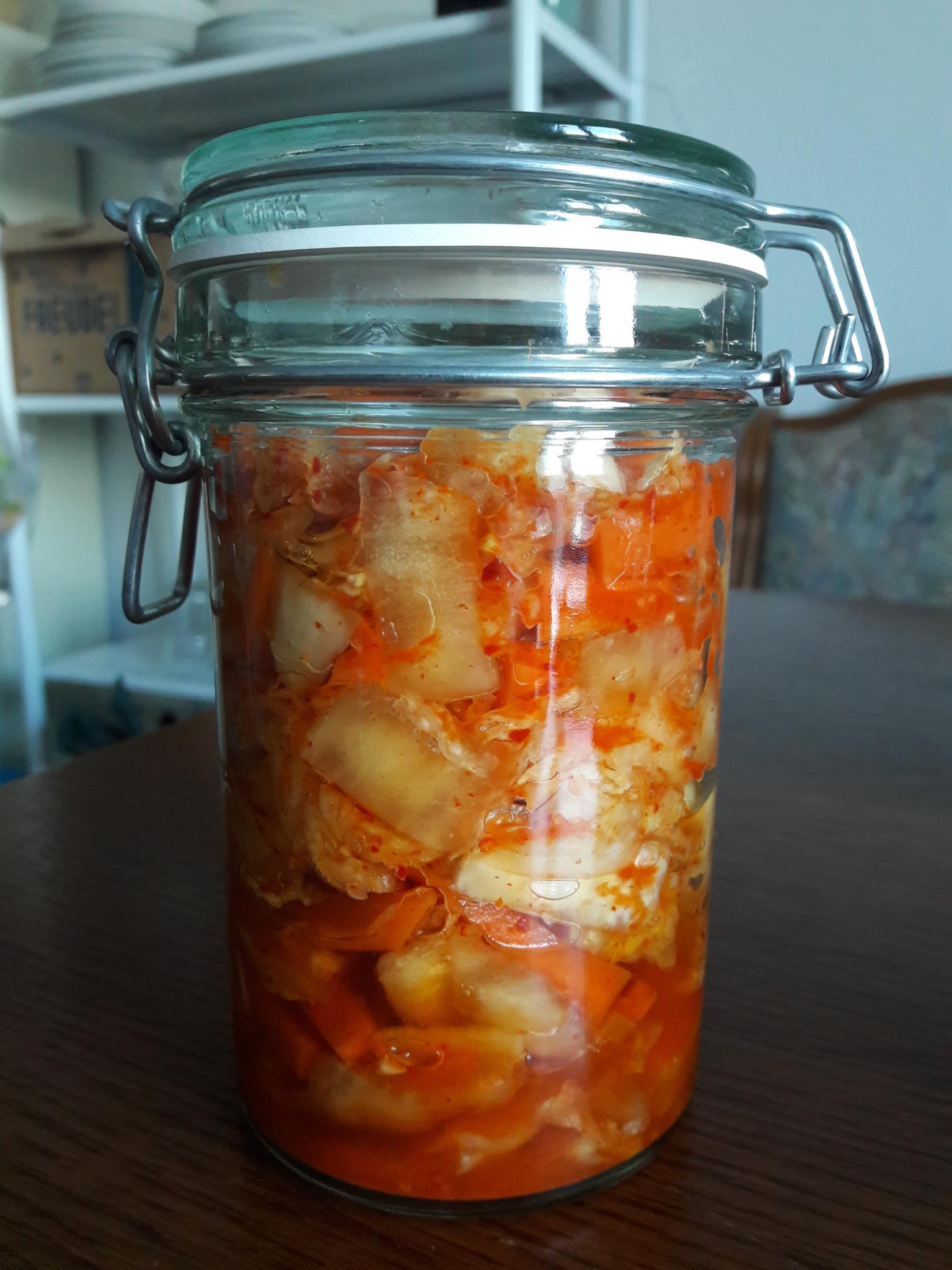
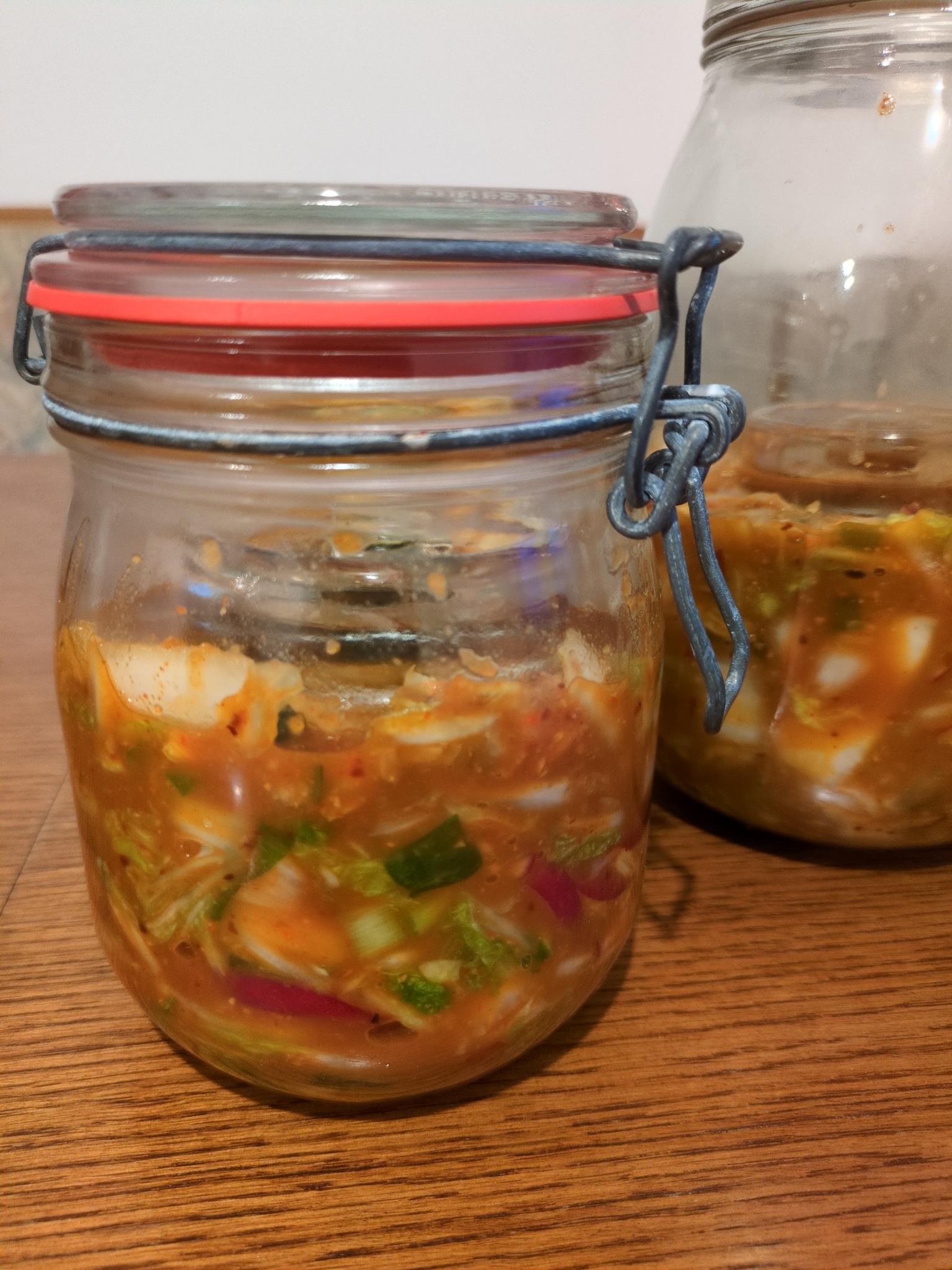
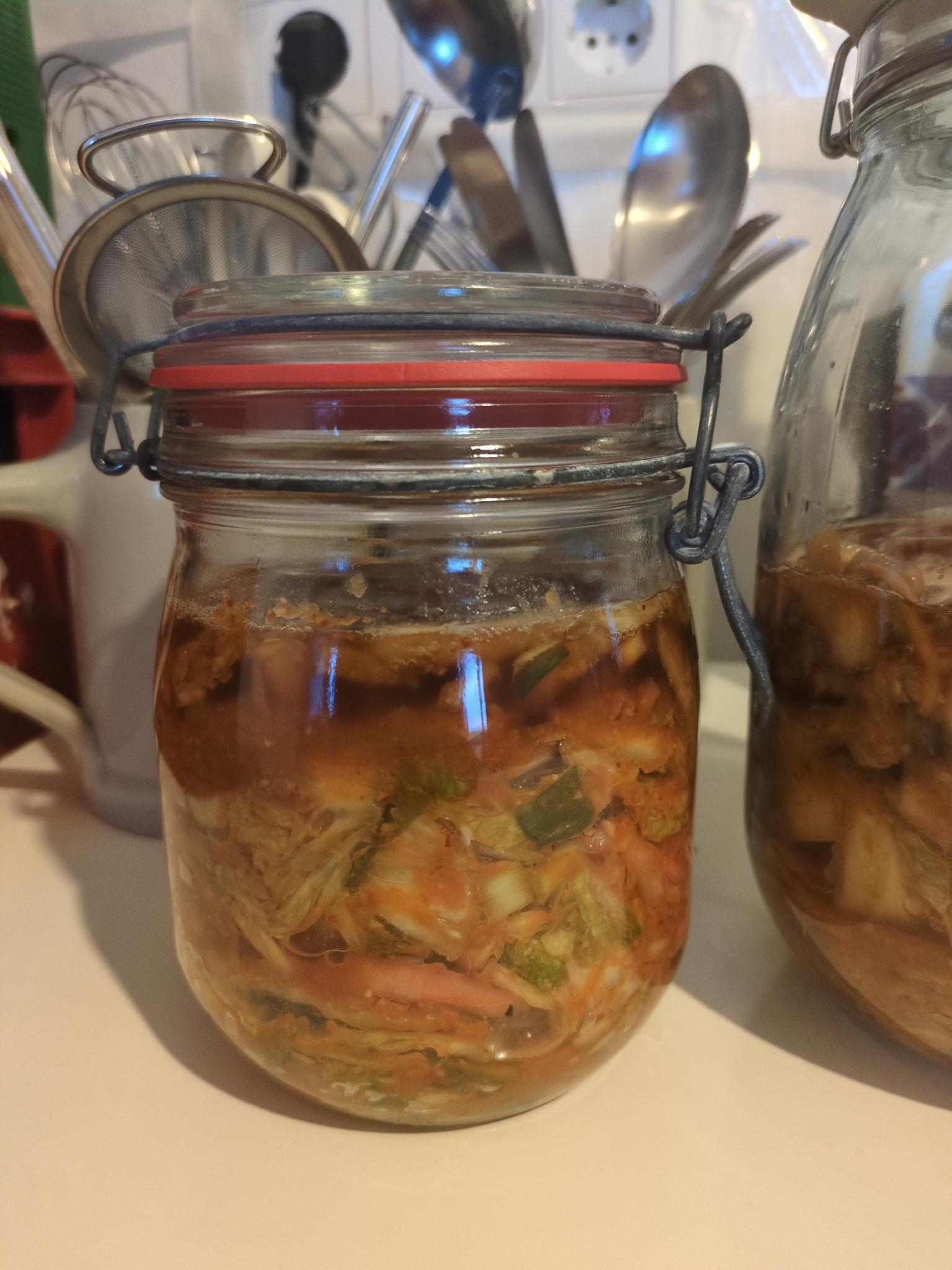
Knead the salty veggies with your hands, water should come out notably. Season with the chili paste. Some suggest wearing gloves, I don't. Bring all together nicely and start filling the jars. Try to compress it inside the jar e.g. by pressing down with a spoon, to have a layer of liquid on top. Remember: Under the brine is fine. Fill the jar only about two third, as when fermentation starts the volume rises. Clean the edges of the jar and close.

Step 5: Ferment

Leave at room temperature for the fermentation to start (1-2 days). You can see the volume rise and little bubbles forming! DO NOT OPEN. After the first days, store somewhere cooler, ideally 12-17° C, for another 7 days, so a mature taste can develop (or just leave where it was). After that store in fridge. Enjoy!

Sauerkraut

This is the easy version, cabbage, salt, that's it. No chili, no paste, just go with what you have. I've also tried carrots (worked great) and leek (not to my taste). Details will follow...


Additional Information

Jar

Clip top jars recommended as they can hold a lot of pressure, I heard Kilner(Trademark) are nice. Use clean ones. Before filling with content, I pour hot water into the jar and move it gently, to reduce to amount potentially unwanted bacteria. (And remove the water again)

Jam funnel

I don't mention it above, but I find a jam funnel really useful for filling jars with jam kimchi. So when done often, my recommendation!

Salt

Type of salt: I use salt without any anti-caking agent or iodine, sea salt works well (some say salt additives can inhibit bacteria growth, I never wanted to risk it)

Gochugaru chili

Gochugaru chili apparently also called Korean chili pepper, a mild chili with strong red color. That's the typical one for kimchi, if you use other types of chili adjust amount and generally adjust for taste.